
How an evening
could unfold.
Three event ideas, with time for arrivals, activities, meals and conversation.
See the shape
of the occasion.
Use these examples to picture your event. Timings and guest numbers can be adapted to your group, venue and budget.
A company evening, with room to connect.
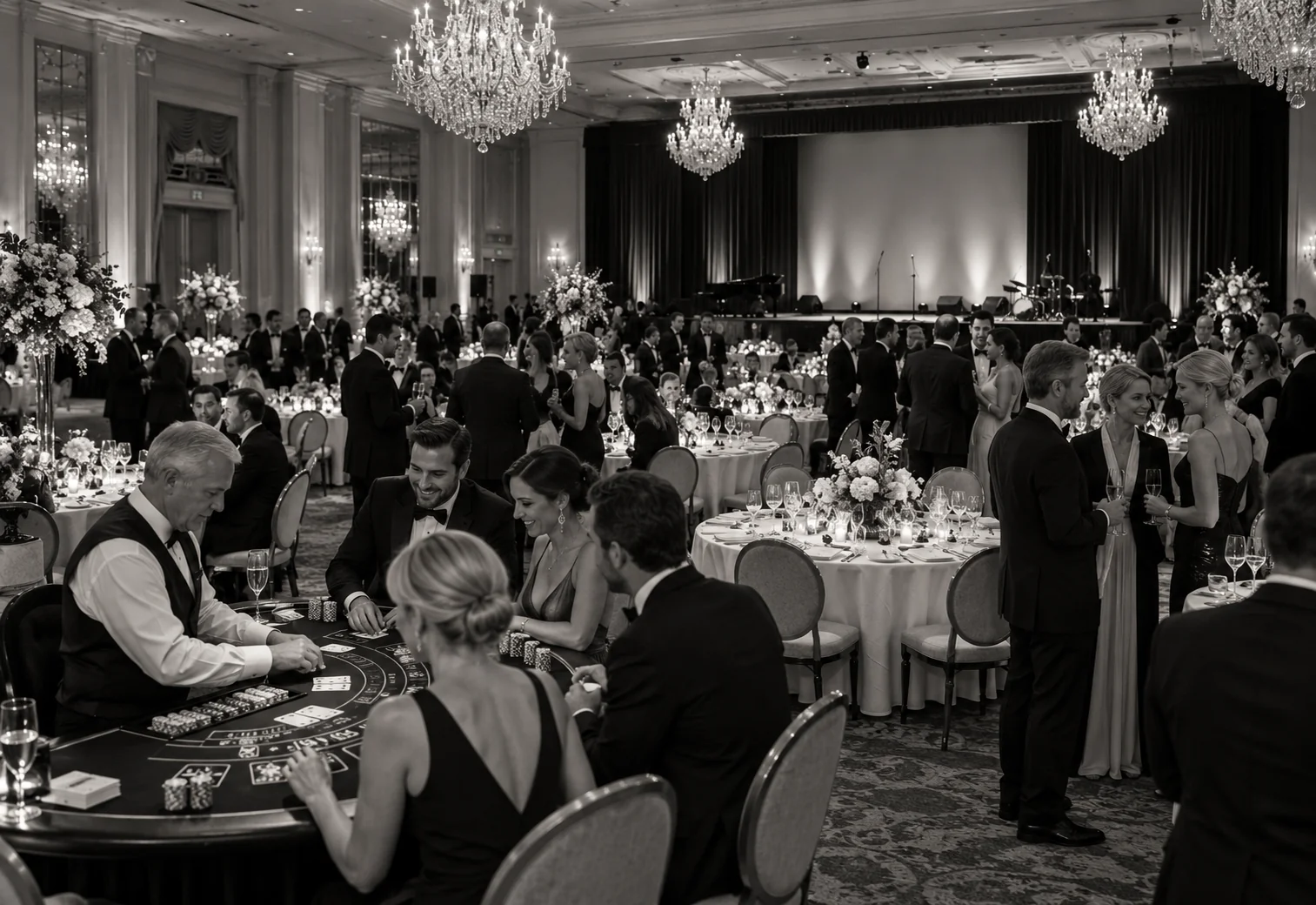
A reception, seated dinner and hosted table activities for colleagues. This example uses an indoor venue with separate dining and activity areas.
Before arrival
Tables are set and the hosts have the running order.
00:00 · Welcome
Guests settle into the reception area and meet over conversation.
00:30 · A shared opening
A brief welcome introduces the evening and any company message.
00:45 · Dinner and conversation
Guests enjoy dinner, with a short speech between courses.
02:00 · Hosted tables open
Dealers explain the activities. Guests move between tables and conversation areas.
03:15 · Bring the room together
A short closing moment thanks everyone for coming.
03:30 · A relaxed finish
The final half-hour is left for conversation and departures.
Planning notes
Allow room for the tables and a social area. Dinner service should share the same running order. Venue hire, food, drinks and extra production are separate budget items.
Discuss your company eveningA mystery around the dinner table.
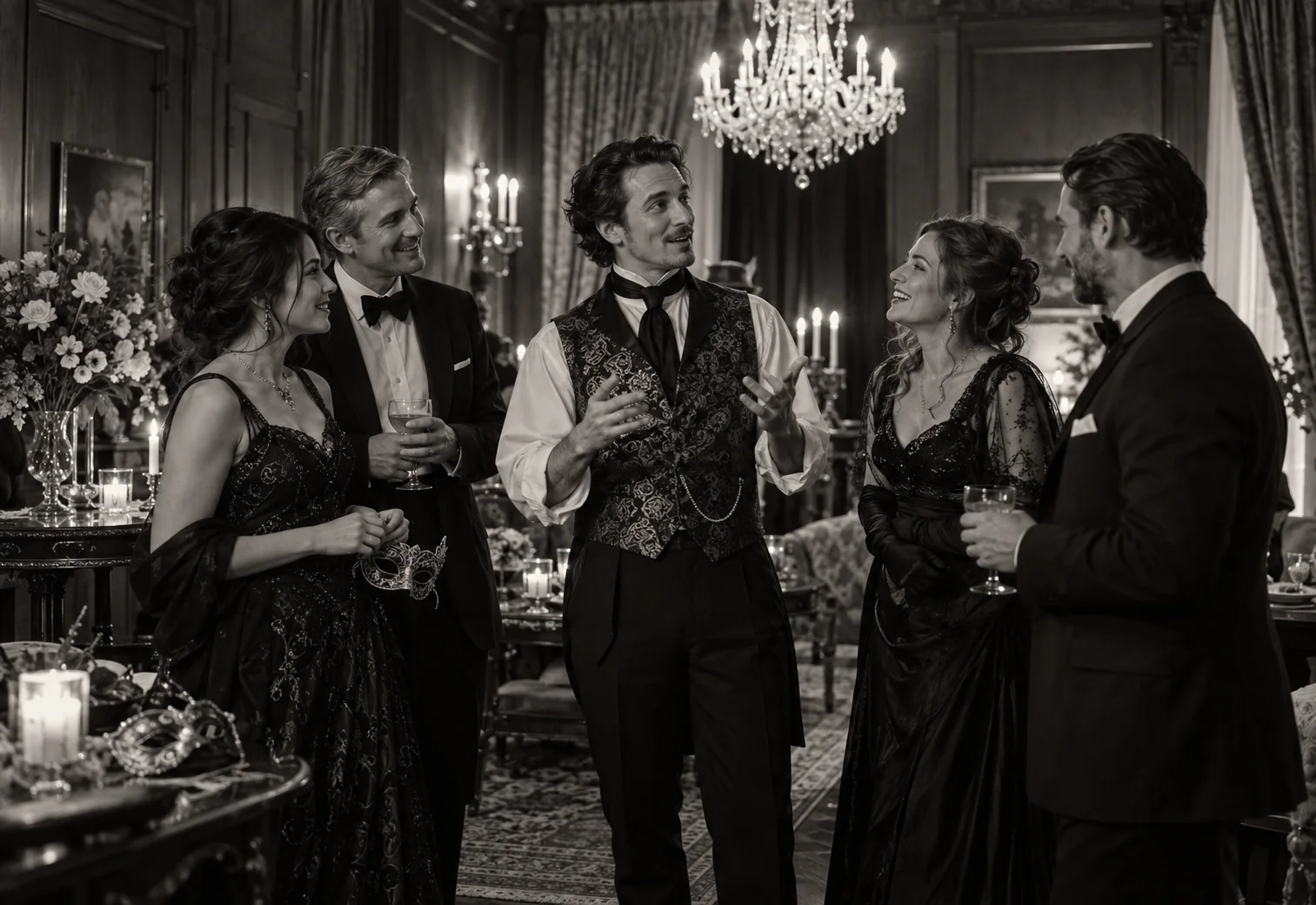
A fictional mystery runs through a private celebration or smaller company dinner. Guests can take light character roles or follow the clues at their table. A private room lets everyone hear the host.
Before arrival
Guests receive invitation guidance and can choose whether to take a character role.
00:00 · Settle in
The host welcomes guests and introduces the fictional setting.
00:20 · The story begins
The first reveal introduces the characters and starts the conversation.
00:45 · First clues
Clue cards and short hosted interactions give each table something to investigate.
01:15 · Dinner pause
The story pauses so guests can enjoy the meal.
01:50 · A new turn
New clues invite tables to rethink their theories.
02:25 · Make a case
Teams share a theory through a speaker or written response.
02:45 · The reveal
The host resolves the mystery, leaving time for conversation and farewells.
Planning notes
Choose the story’s tone and the level of guest involvement. Additional actors, bespoke scripts and elaborate sets add to the budget and preparation time.
Plan your mystery dinnerA team afternoon that gets people talking.
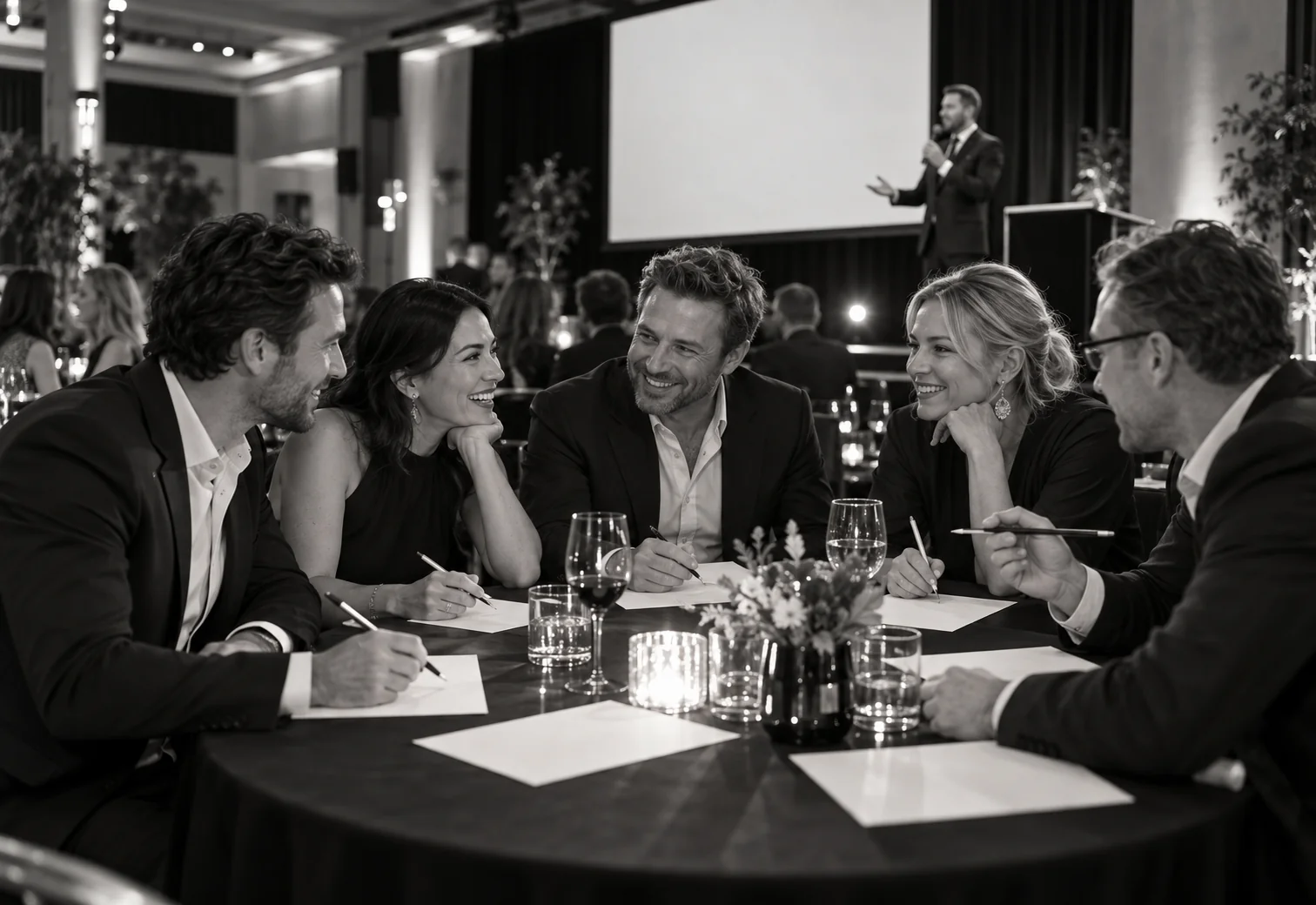
A mix of quiz and game-show rounds gives colleagues several ways to contribute. This example uses small team tables, audio and a screen where needed.
Before arrival
The organiser shares the purpose of the session and any topics to avoid.
00:00 · Welcome and settle
The host explains the programme and ways to take part.
00:15 · An easy first round
An approachable opener helps teams find their rhythm.
00:40 · Different strengths
Visual, discussion and problem-solving rounds bring different skills into play.
01:10 · A proper pause
Guests have time for refreshments and a break.
01:30 · A company connection
An optional company round draws on approved shared knowledge.
02:00 · Final challenge
A short collaborative activity brings the teams together for the finish.
02:20 · Close together
The host wraps up, with time for a closing message.
Planning notes
The room needs clear sightlines and sound. Supply company questions in advance and tell us about seated alternatives or other access needs. Venue, refreshments and specialist equipment are separate budget items.
Shape your team programmeKeep the moments
that matter.
Choose the parts you like. A reception activity may be enough for a dinner with speeches. A private celebration might centre on one story, while a team session can be shortened to follow a meeting.
Include your preferred activities and any fixed times in your enquiry.
Tell us what you have in mind.
Share your date, guest count and an idea of the occasion.